
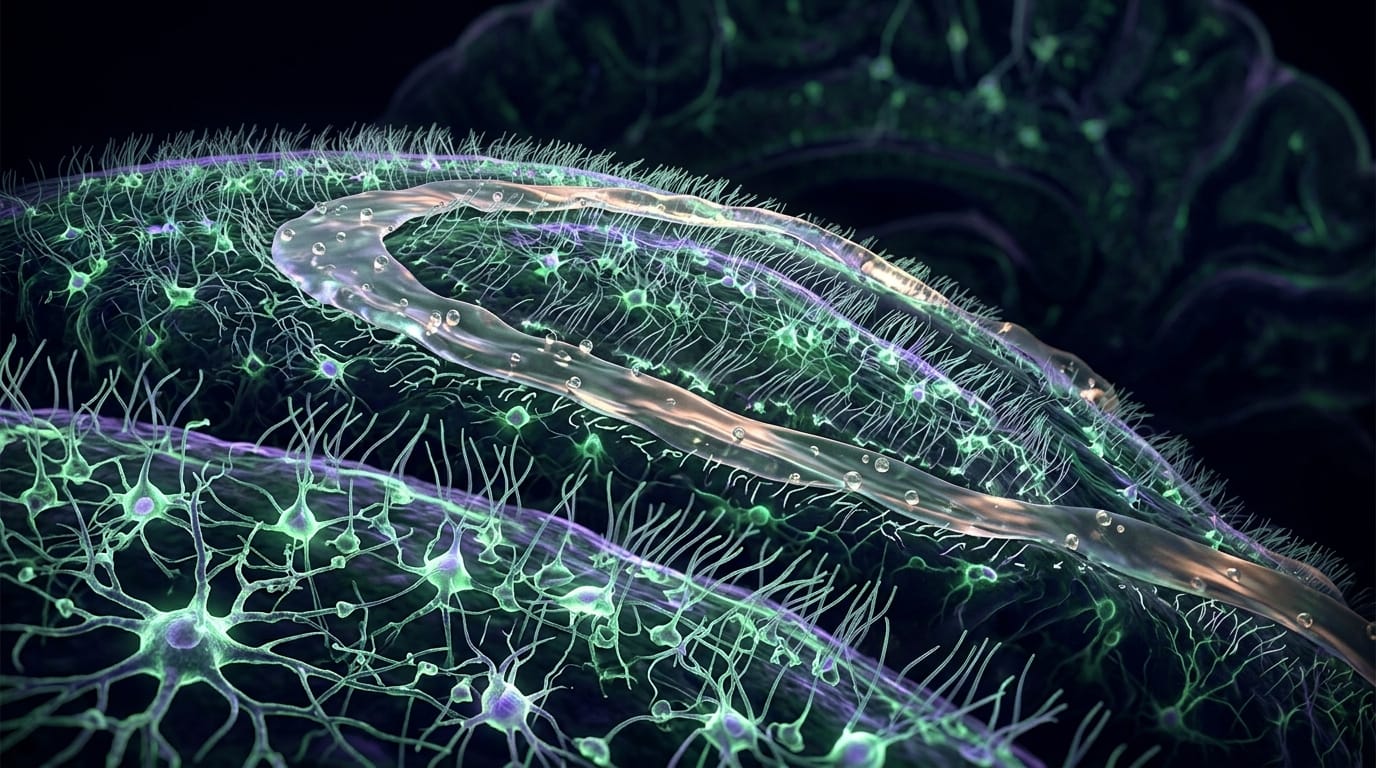
The brain, a soft, delicate universe within our skulls, relies on an unseen network of intricate systems to function, systems so finely tuned we rarely consider their mechanics. Take, for instance, the continuous flow of fluid that cushions and nourishes it, or the precise construction of its internal spaces, like channels carved into a sponge. Despite seeming fundamental and almost automatic, these processes demand constant, active management from specific, diligent cellular workers. For years, scientists have understood the general players involved in maintaining these critical systems. They knew about microglia, the brain’s resident immune cells, which patrol for damage and infection, clearing debris like tiny street sweepers. They understood the importance of the cerebrospinal fluid, or CSF, which fills the brain’s ventricles—those fluid-filled chambers deep inside—and bathes the entire central nervous system, carrying nutrients and whisking away waste. What remained elusive, however, were the precise, molecular hands guiding the development of these ventricles, the process known as brain ventriculogenesis, and maintaining the steady balance of the CSF.
A team of researchers dedicated to unraveling these fundamental mysteries began to look closer at what those microglia cells were actually doing. They weren’t just cleaning up; they were performing specific, structural jobs. The team honed in on a particular protein, known as GRB2, nestled within these microglial cells. GRB2 isn’t a flashy protein, not one often celebrated in headlines. It’s an adaptor protein, a connector that helps relay signals from the cell’s surface to its interior, essentially acting as an essential messenger in cellular communication pathways. Most thought its roles were fairly general, but this team suspected it might have a more specialized, key assignment within the brain.
What they discovered recast GRB2 from a general-purpose messenger into an indispensable architect. The researchers found that microglial GRB2 is absolutely essential for the proper development of the brain’s ventricles. Imagine these ventricles as the brain’s internal plumbing system; without GRB2, those pipes simply wouldn’t form correctly. This isn’t just about creating empty spaces. These chambers are vital for the continuous production and circulation of CSF, and any disruption to their formation can have cascading effects on brain health. Their work showed that GRB2 within microglia cells orchestrates the very scaffolding that builds these crucial inner structures.
But the story didn't end there. Beyond its role in construction, they also found that microglial GRB2 plays a vital part in maintaining the ongoing balance of cerebrospinal fluid, a process called CSF homeostasis. Think of CSF as a slow, steady river, constantly flowing, its levels and composition needing meticulous regulation. Too much, and pressure builds; too little, and the brain lacks cushioning and nourishment. The team’s discovery means that GRB2 in microglia isn't just building the riverbeds, it’s also helping to regulate the river itself, ensuring its depth and purity remain stable day after day. Without functional microglial GRB2, the delicate balance of this vital fluid goes awry, threatening the brain’s entire operating environment.
This finding echoes a broader principle emerging in neuroscience: highly specific proteins are often the unsung heroes behind complex neural structures and functions. For example, a parallel discovery from other researchers exploring the molecular architecture of nerve cells described another protein, Paralemmin-2, or Palm2. This protein, they found, is crucial for building and maintaining specific segments of axons, the long fibers that transmit electrical signals in the brain. When Palm2 was missing, these vital segments shortened, reducing the cell's ability to fire signals. Just as Palm2 ensures the precise form and function of nerve fibers, microglial GRB2 ensures the precise form and function of the brain’s fluid systems. Each discovery maps another critical player in the brain’s intricate molecular landscape. Yet, even with such specific molecular architects, the system's strength depends on a cell’s overall health. Another team, in a separate line of inquiry, revealed how failures in proteostasis—the ongoing process cells use to make, fold, and discard proteins—can cripple a cell. They showed that if newly made proteins don't fold correctly, it can damage a cell's mitochondria, its energy powerhouses, leading to cell death. This general vulnerability applies to all cells, including the microglia that rely on GRB2. Even if GRB2 is present and ready for its essential work, if the microglial cell itself is struggling with basic protein management, its vital roles in brain ventriculogenesis and CSF homeostasis could be compromised.
These insights paint a richer picture of the brain as a place of constant, dynamic maintenance, where every protein, every cell, plays a part in a deeply interconnected system. The work highlighting microglial GRB2 doesn't just give us a new understanding of a single protein; it reveals the specific, dedicated labor that keeps the brain's internal waters flowing and its essential chambers precisely formed. It shows us the quiet diligence required to simply exist, hour after hour, year after year, within the fragile, fluid world inside our heads. ◆
Sourced from: "Microglial GRB2 is essential for brain ventriculogenesis and CSF homeostasis"