
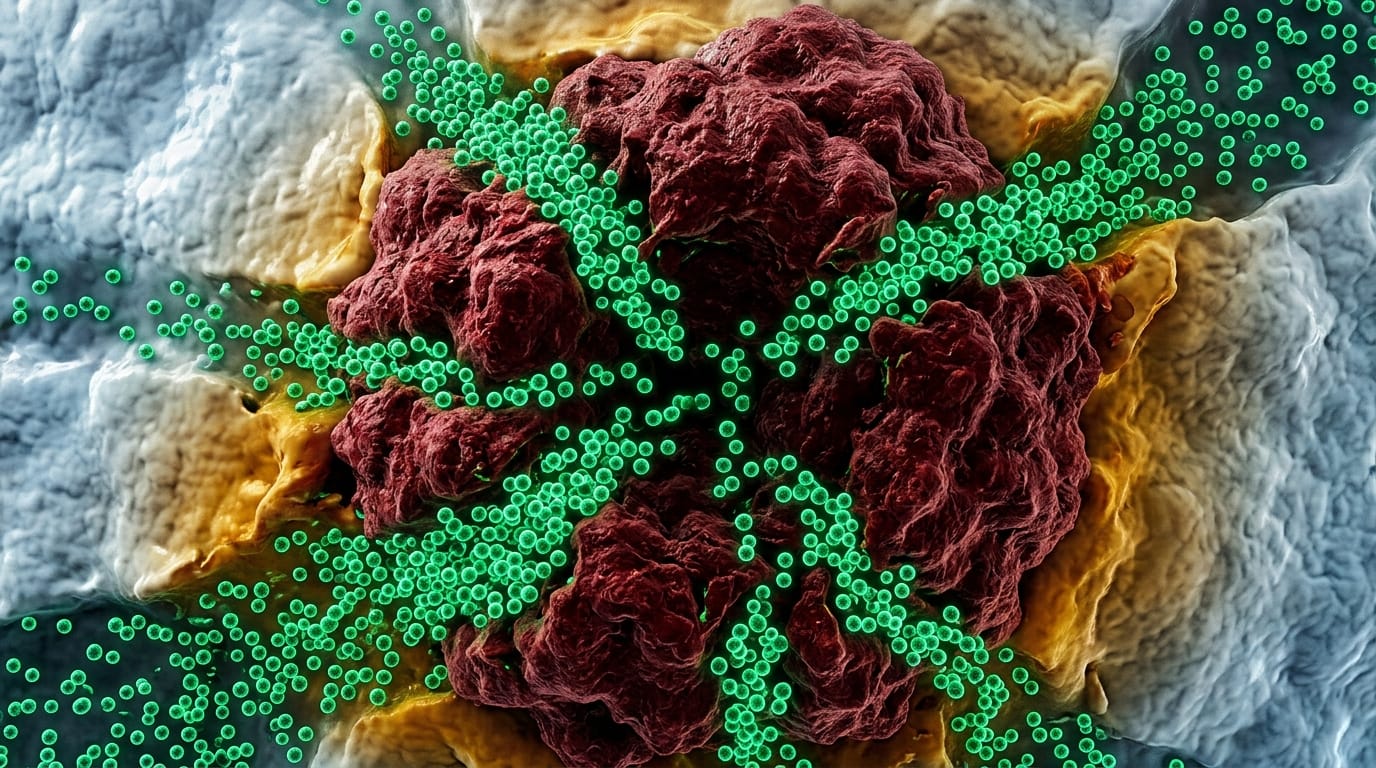
A formidable opponent, cancer often outsmarts even our most advanced therapies. For patients battling difficult cancers, particularly melanoma, one of the most promising avenues of treatment involves training the body’s own immune cells to attack tumors. This strategy, known as adoptive cell transfer, or ACT, involves taking a patient’s T cells, supercharging them in the lab to recognize and destroy cancer, then putting them back into the body. It sounds revolutionary, and in some cases, it has been. But the reality for many is sobering: ACT doesn't always work, and when it does, the benefits often don't last.
The core challenge is surprisingly simple: getting enough of these specially trained T cells to the tumor itself. Tumors are not passive targets; they are sophisticated fortresses, actively resisting immune invasion. They create a hostile tumor microenvironment – a complex ecosystem that can suppress immune cells and block their entry, effectively slamming the door shut on vital reinforcements. Many patients do not experience the life-changing clinical benefits we hope for because the transferred T cells never reach the battlefield in sufficient numbers, or they lose their power once they arrive.
New research from Pengxin Zhang and colleagues at The University of Texas M. D. Anderson Cancer Center reveals a powerful way to throw open those tumor doors, significantly boosting the effectiveness of adoptive cell transfer. Their work identifies a specific mechanism that transforms a familiar cancer therapy into an unexpected guide for immune cells, leading them directly to where they are needed most.
The study investigated how combining ACT with a therapy known as PD-1 blockade could improve outcomes. You might recognize PD-1 blockade; it’s a widely used treatment that works by releasing a natural “brake” on T cells, allowing them to fight cancer more effectively. The surprise finding here is that blocking PD-1 does more than just unleash the T cells; it actively changes the tumor’s environment to attract them.
The researchers conducted experiments using mice with tumors, including models for melanoma and colon adenocarcinoma. They prepared the mice by giving them a low dose of radiation, similar to some pre-treatment regimens for human ACT patients, which creates space for the new immune cells to thrive. Then, they transferred millions of specially engineered T cells into these tumor-bearing mice. What they observed after treating these mice with a PD-1 blocking antibody was striking: the PD-1 blockade led to about three times more transferred T cells gathering at the tumor site compared to mice that received a control treatment. In one type of tumor, these specific T cells made up only about 20% of the immune cells present without PD-1 blockade; with the blockade, that number jumped to approximately 50%.
The consequence of this dramatically increased immune presence was clear: enhanced tumor regression. More T cells meant smaller tumors.
This means PD-1 blockade isn’t just about making T cells more active; it's also about making the tumor a more welcoming target. The team identified the specific process involved. The team pinpointed a critical molecular conversation. Blocking PD-1 increased the presence of a specific immune signaling protein, called IFN-γ, directly within the tumor. This protein, in turn, boosts levels of powerful immune-attracting chemical signals – notably one called CXCL10. Think of these signals as a potent scent trail, guiding the T cells through the dense, suppressive tumor microenvironment straight to the cancer cells.
For years, we have known that T cells follow these chemical signals, or chemokines, to tumors. We also know that tumors are masters at disrupting these signals, essentially cloaking themselves from immune detection. This research shows that PD-1 blockade can overcome this cloaking, turning up the volume on the guiding signals. It's like finding a way to make the hidden fortress emit a powerful, unmistakable beacon.
This discovery is especially critical because the primary hurdle for adoptive cell transfer therapies isn't just about making T cells stronger, but about ensuring they can actually get inside the tumor and persist there. This study provides a concrete, evidence-backed strategy for doing just that. While these promising results come from studies in mice, the fundamental mechanisms at play – PD-1 signaling, IFN-γ production, and chemokine gradients – are well-understood in human biology.
It’s important to acknowledge that this research didn't show the PD-1 blockade altering all immune-suppressing cells within the tumor, which sometimes happens in other contexts. This suggests the effect on T cell migration is a specific and central part of its benefit when combined with ACT.
The next urgent step is to translate this understanding into clinical studies. Combining PD-1 blockade with adoptive cell transfer could provide a powerful dual immunotherapy for cancer patients, enhancing both the potency and the precision of our immune-driven attack. Imagine thousands of patients whose T cells could finally find their way to the deepest corners of their tumors. This work pushes us closer to making that a reality, by equipping our immune cells with a better map and a clearer path forward. ◆
Sourced from: "Toripalimab consolidation after chemoradiotherapy in limited-stage small cell lung cancer: a phase II, randomized controlled study (GASTO-1052A)." by Zhang, Pengxin et al.